
Harmony Day, 21 March, celebrates Australia’s cultural diversity and promotes inclusiveness, respect and a sense of belonging for everyone.
The opportunity
We had an opportunity to use user-centric design methods to better promote the day’s central message, “Everyone belongs”, to make it easier to plan for events and to drive celebrations beyond this date to throughout the year.
Our process
Target user group
People from five target groups: schools, sporting organisations, communities, government bodies and corporate sector
User interviews, journey maps and personas
Working very closely with our Senior Graphic Designer, we conducted phone interviews asking questions about the existing site including why they use it and what we could improve on to increase engagement.
We found that the main reasons people visit the site are to access resources and order the kit. We then designed every page of the new site, informed by suggestions and feedback from participants.
Findings informed journey maps and profiles for each audience group, which brought user pain points and needs closer to our multidisciplinary project team.
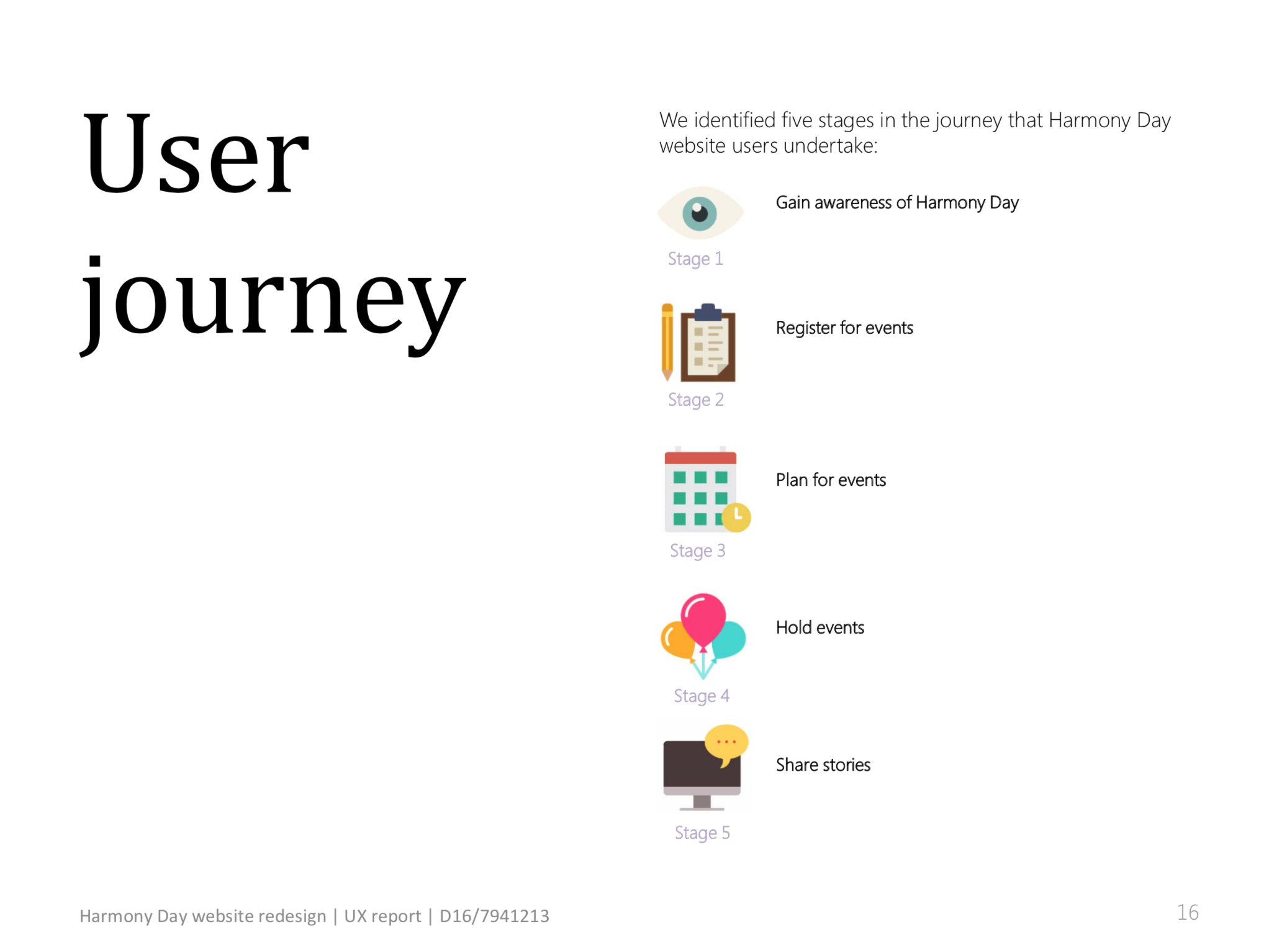
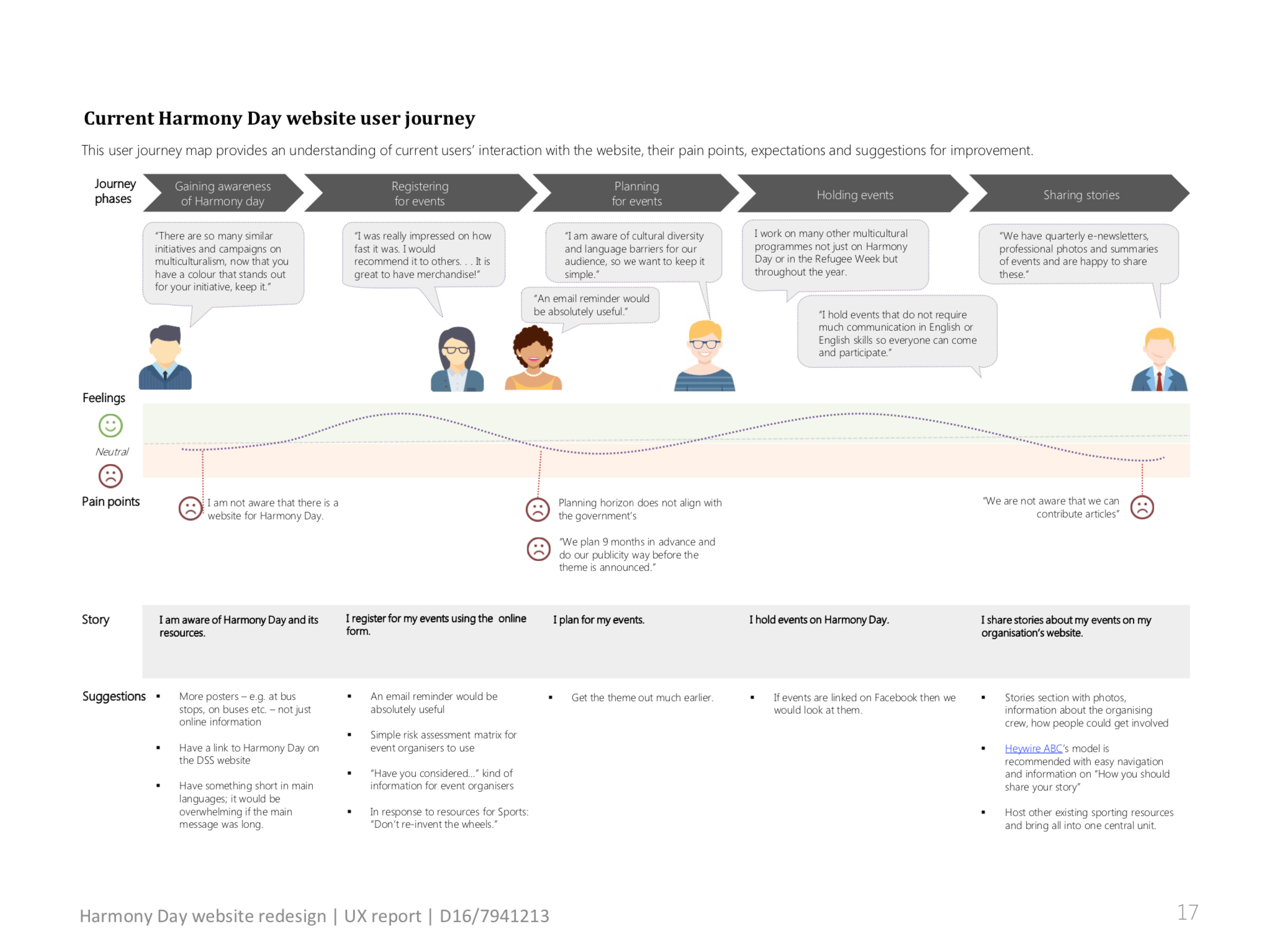
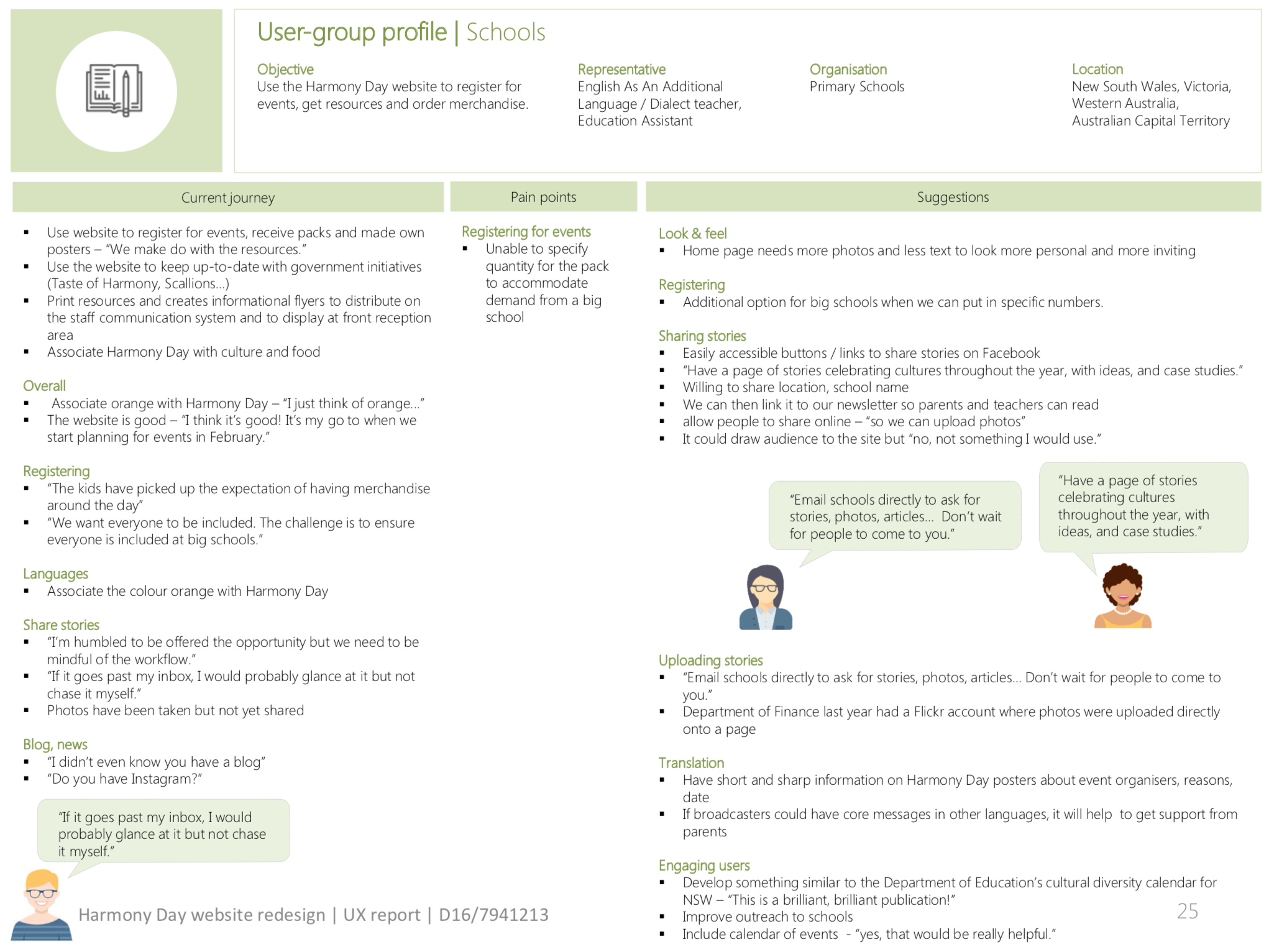
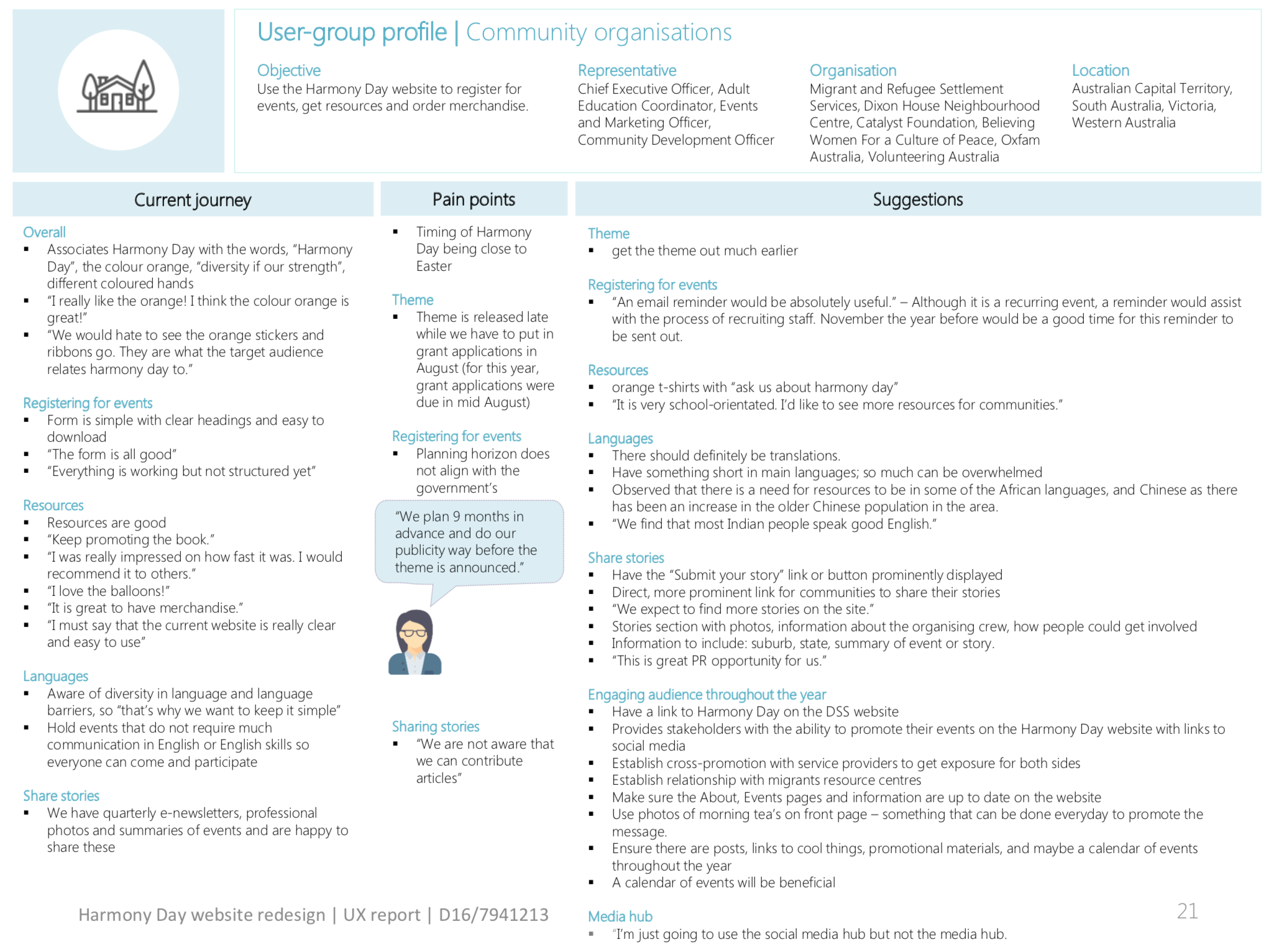
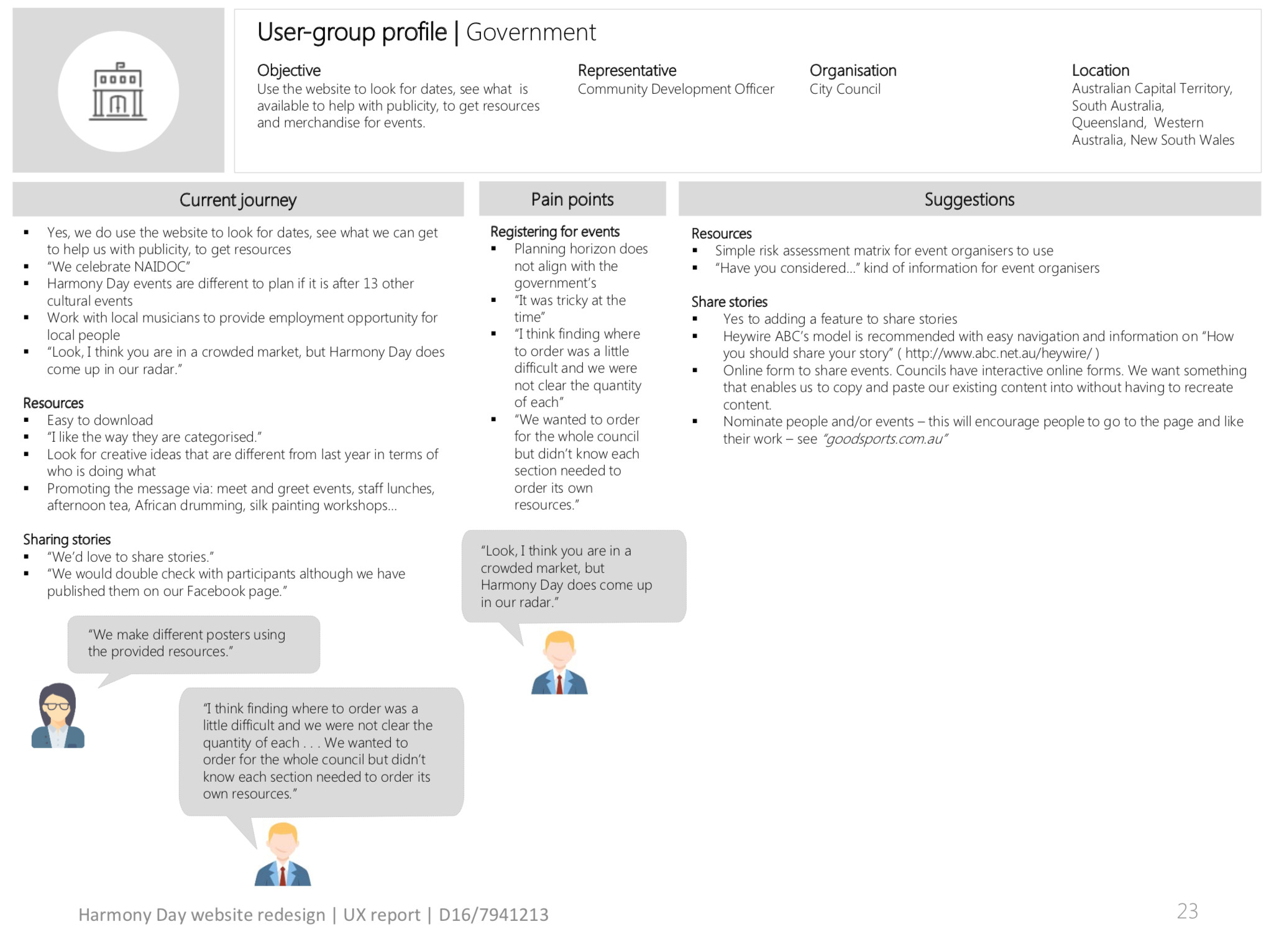
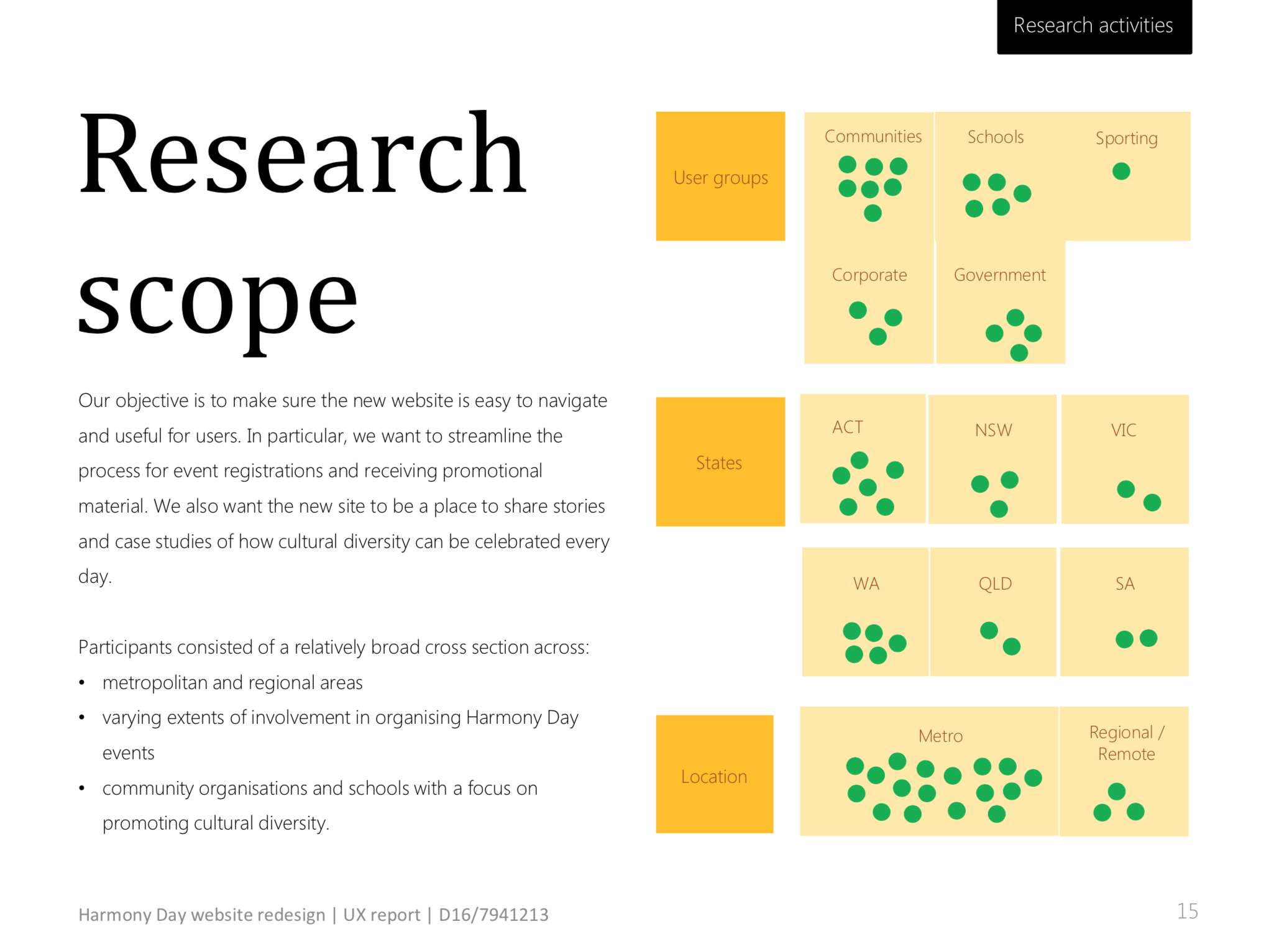
We designed the new site based on the following key insights gathered from 21 phone interviews with 5 schools, 5 local councils, and 11 community, private, sporting organisations across 6 states and territories.
Key Discovery findings
The colour orange is symbolic of Harmony Day. All participants who had held events or used the website associated Harmony Day with the colour orange.
There are so many similar initiatives and campaigns on multiculturalism, now that you have a colour that stands out for your initiative, keep it.”
Discovery Research participant
Lead time for theme announcement is short. The announcement of each year’s theme for Harmony Day is too close to Match 21 , making it difficult to plan for events.
We plan 9 months in advance and do our publicity way before the theme is announced.
Discovery Research participant
Users want a calendar of events and festivals. They suggested that we incorporate a calendar of cultural dates and multicultural festivals in each state.
The current registration process is easy. The most common objective visitors have on the site is to register for free resources. The current registration process is easy.
Users expect more sharing of stories and events. Users wish to get celebration ideas from stories on past Harmony Day events, while event organisers want to share what they do for Harmony Day with others.
Resources should be in multiple languages. Participants suggested having Harmony Day’s main message translated to multiple languages to promote awareness and inclusiveness.
Secondary research
Harmony Day survey
We built on shared insights from the Harmony Day 2016 Feedback Survey to further our understanding of how the current website engages with and assists users in participating in events.
Previous market research
Shared insights from a previous research were used to design contextual interviews to further our understanding of user needs, with a focus on their current experience with Harmony Day’s resources and engagement methods, and suggestions to build stronger engagement throughout the year.
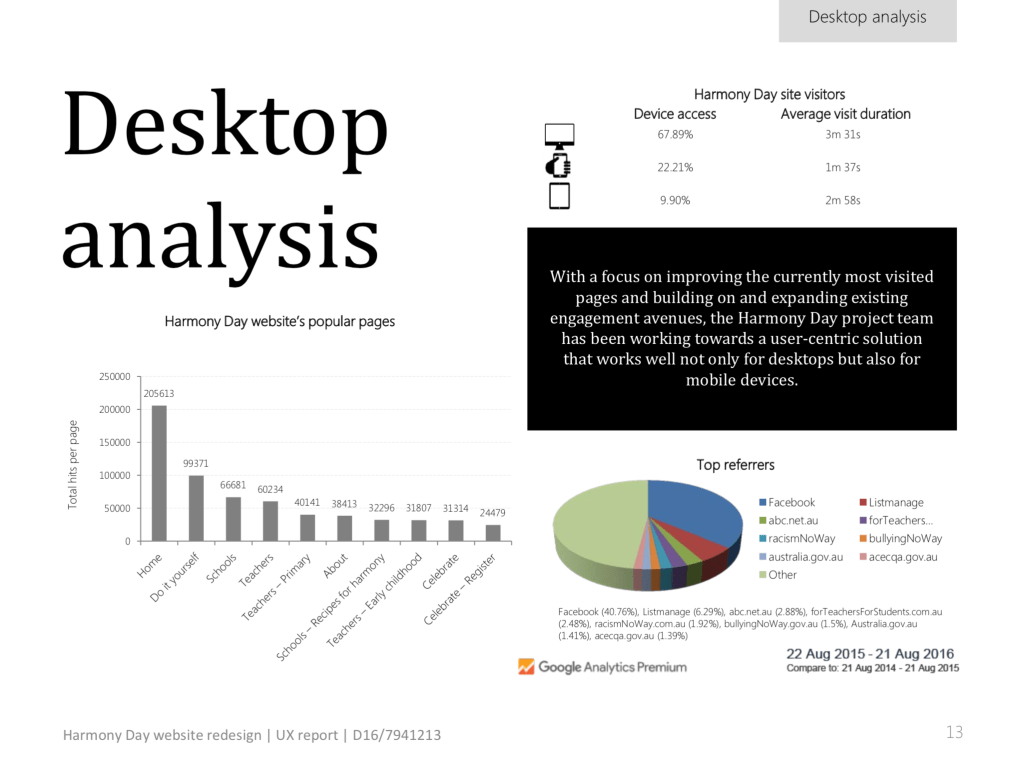
Desktop analysis
With a focus on improving the currently most visited pages and building on and expanding existing engagement avenues, the Harmony Day project team has been working towards a user-centric solution that works well not only for desktops but also for mobile devices.
Further, a summary of users’ geographic distribution helped with the recruitment of

Iterative testing of clickable prototypes
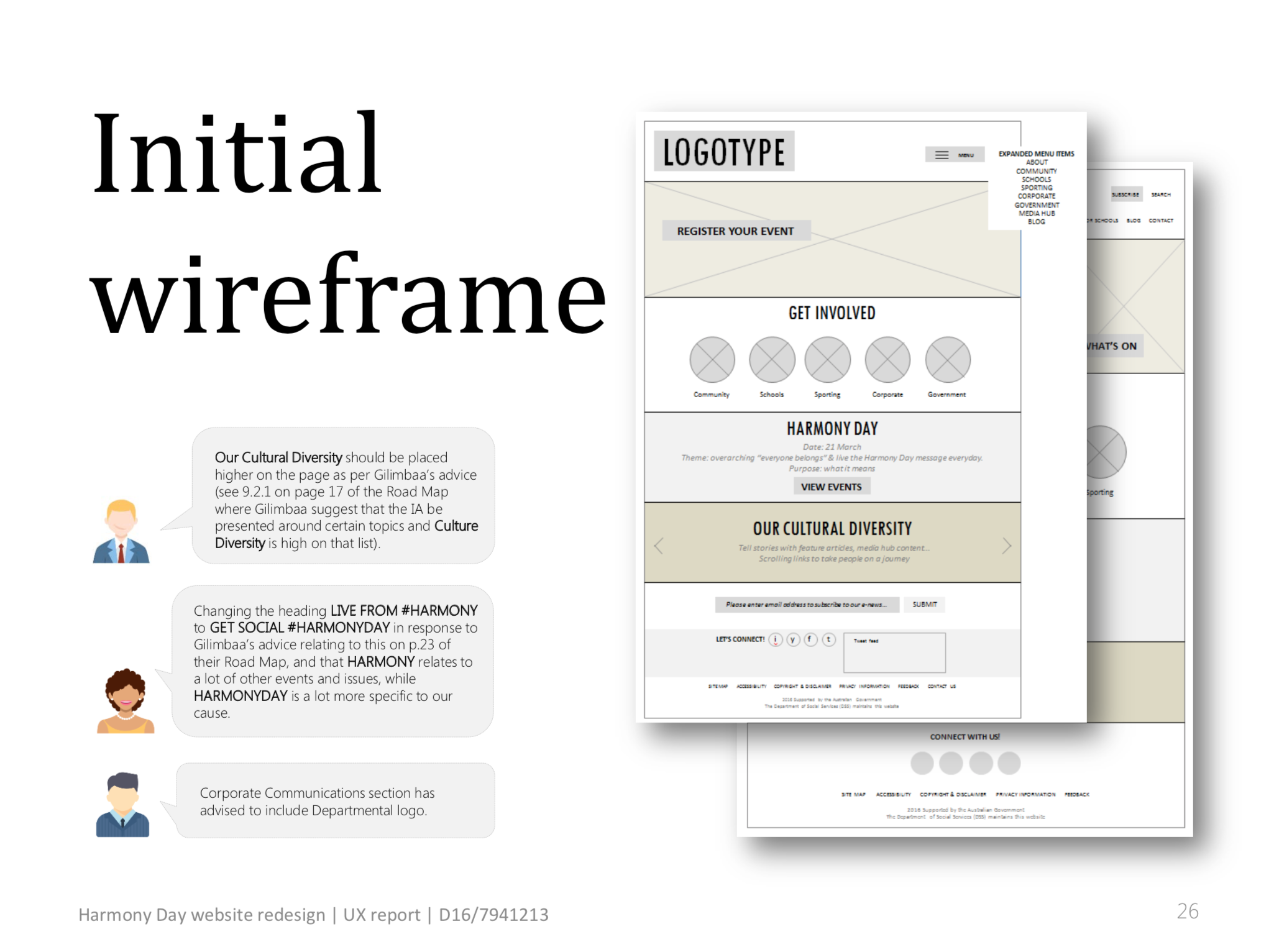
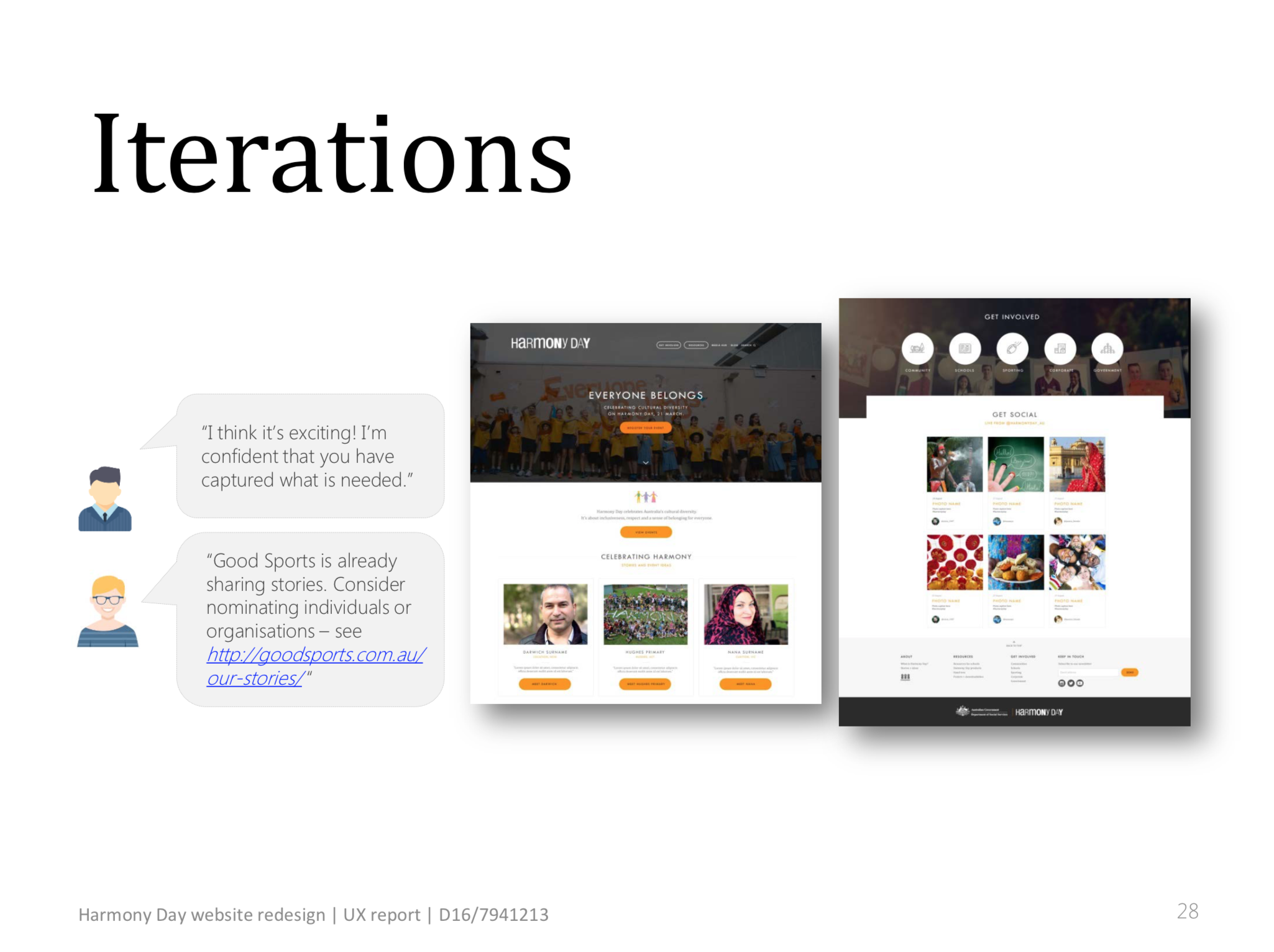
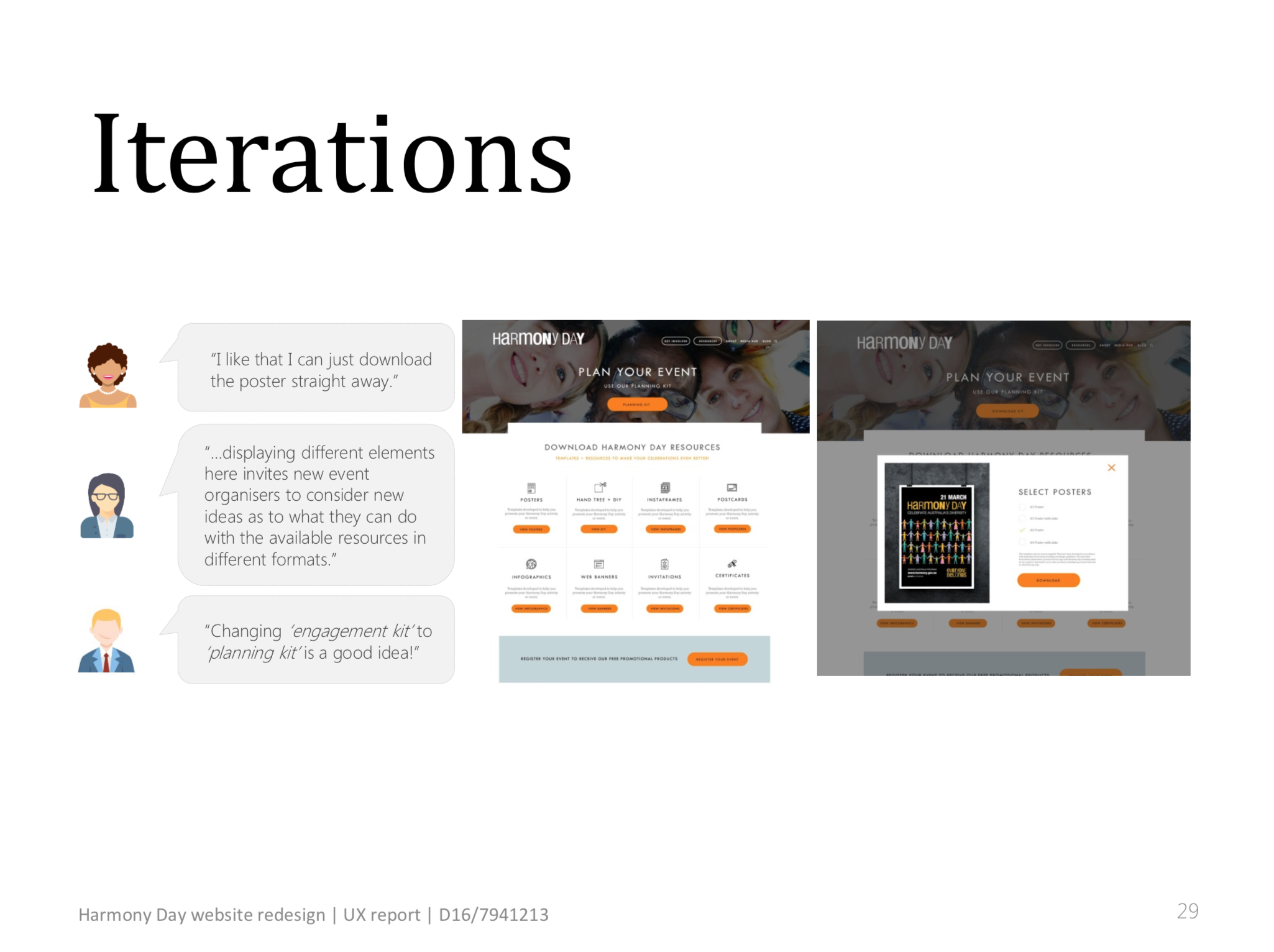
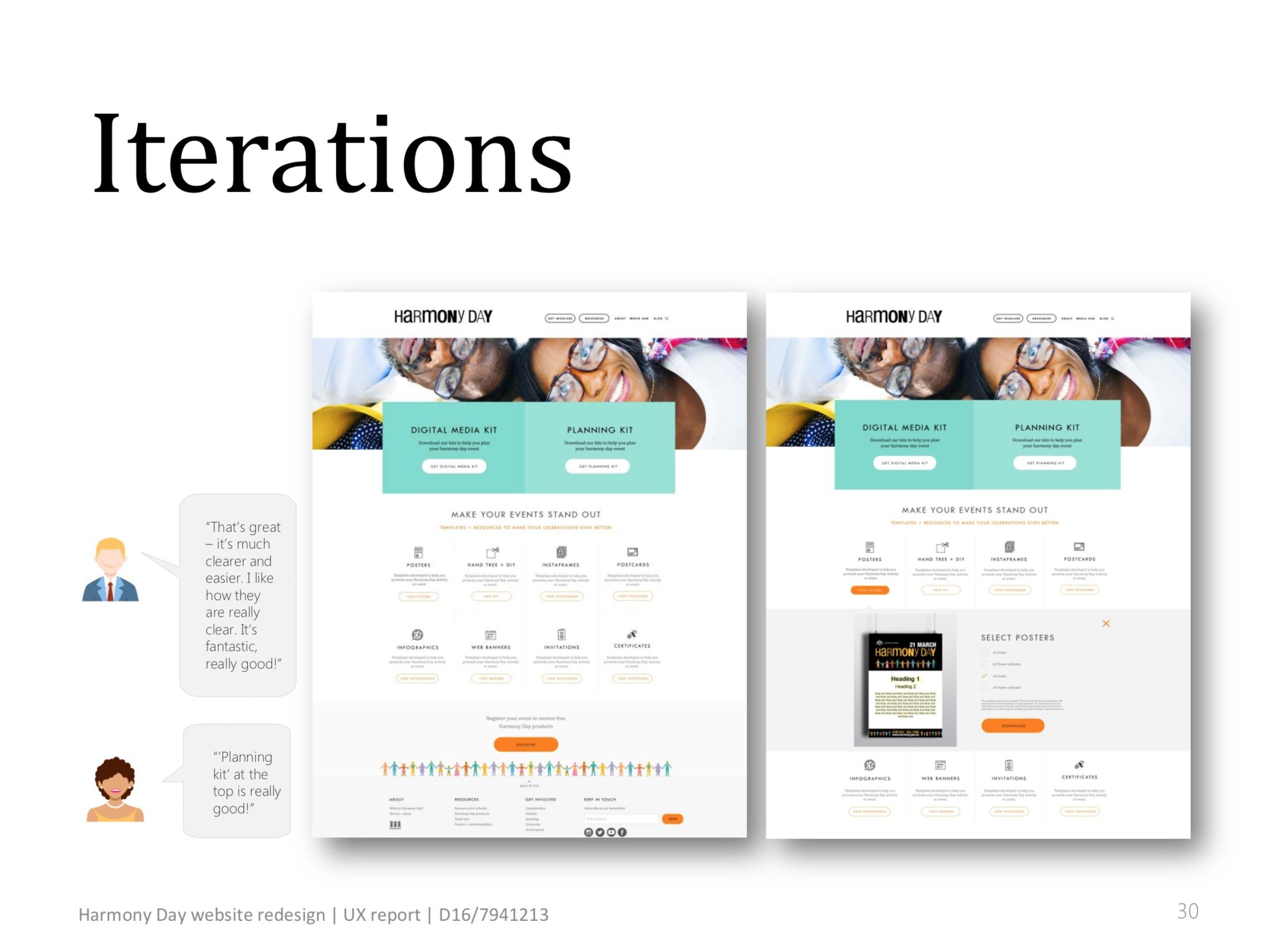
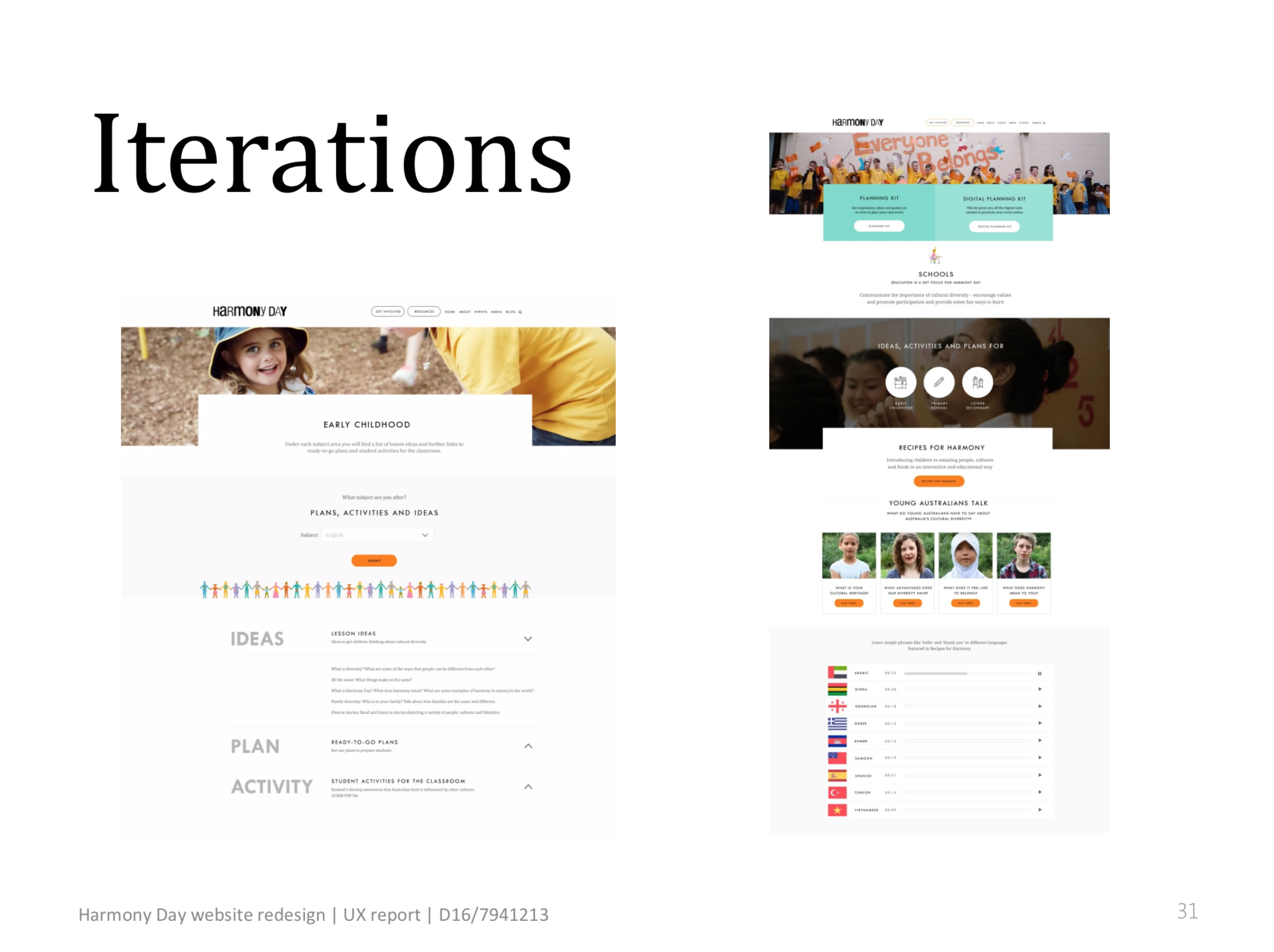
Our Senior Graphic Designer produced several design iterations, which we continuously sought feedback on.
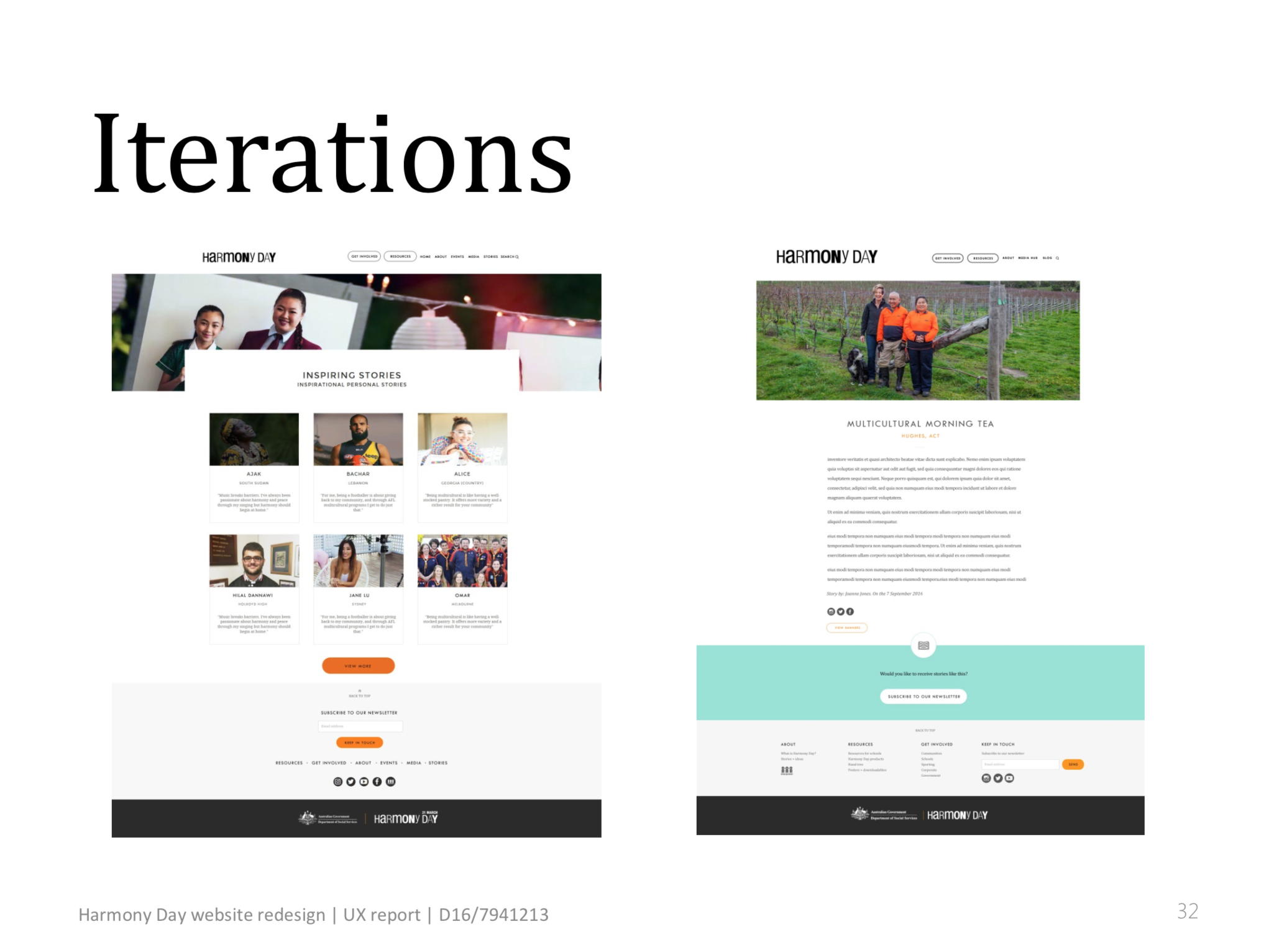
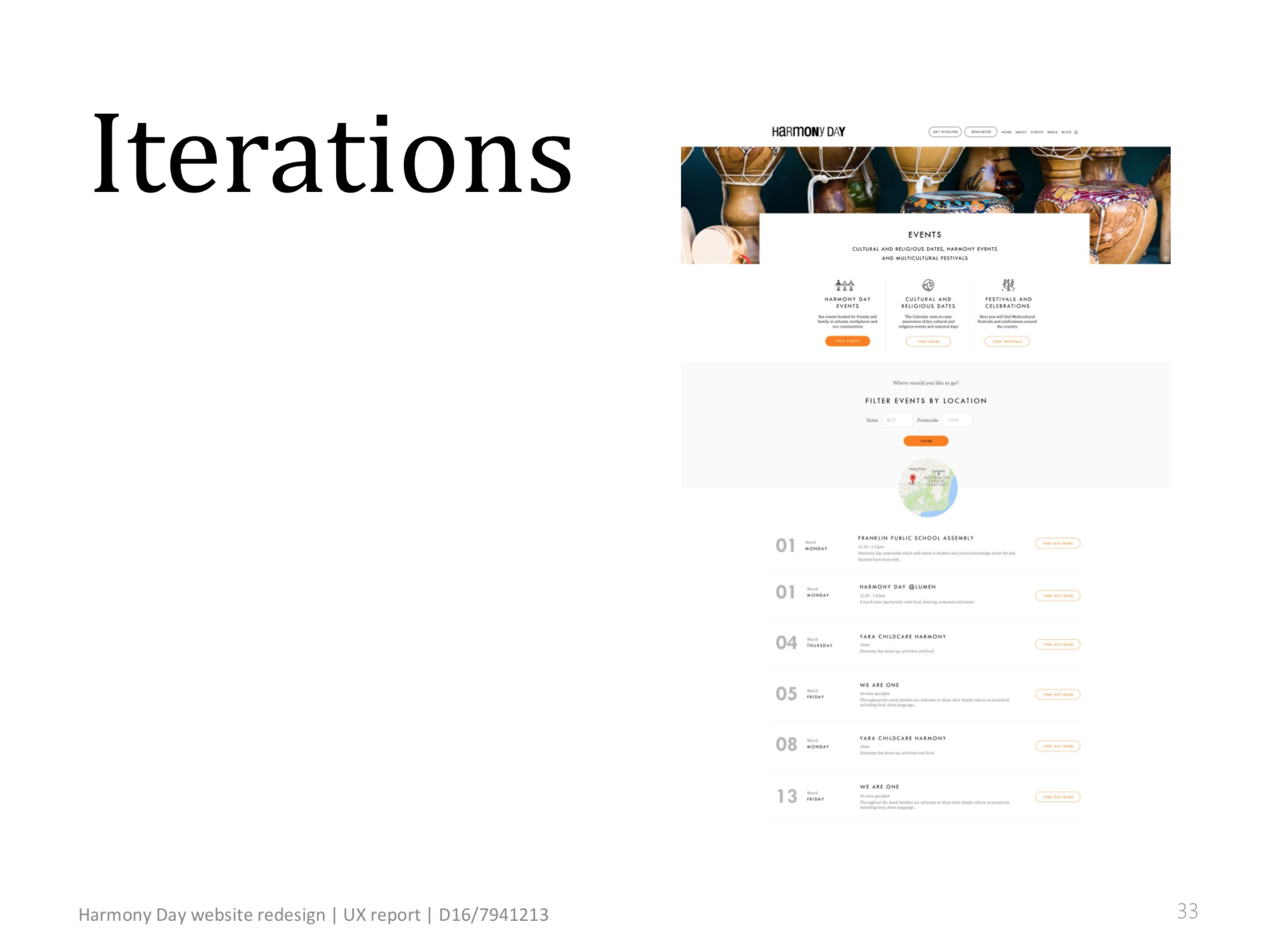
The results
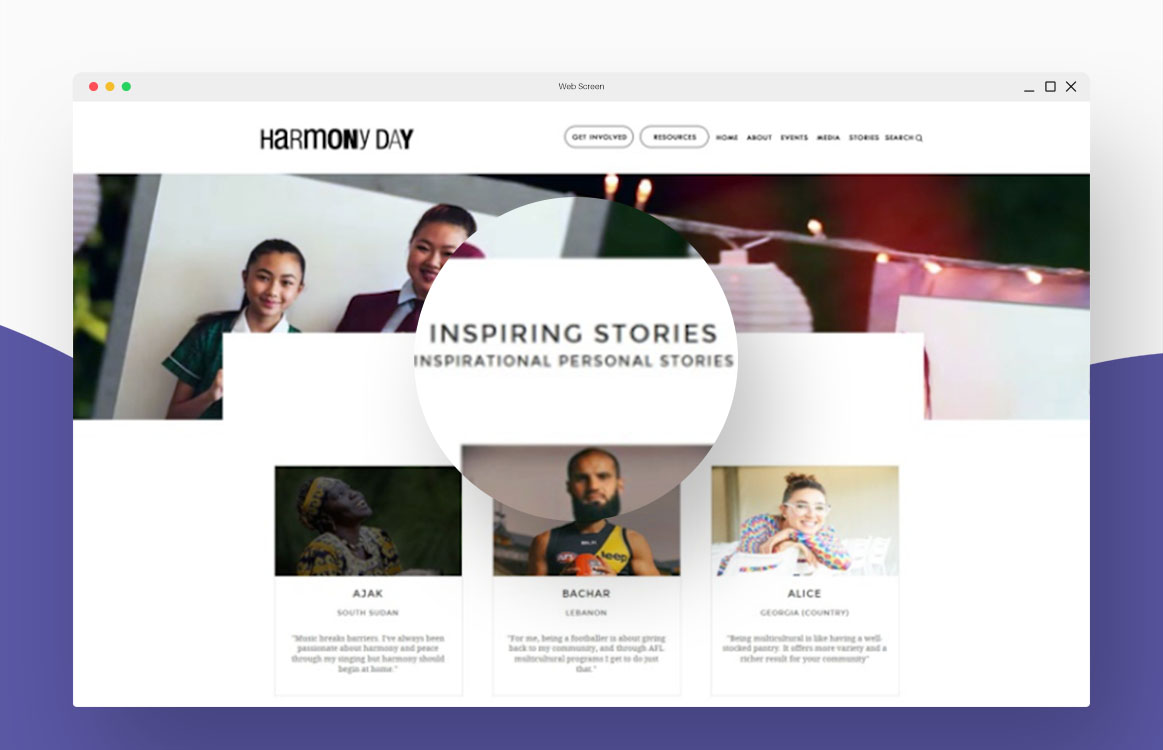
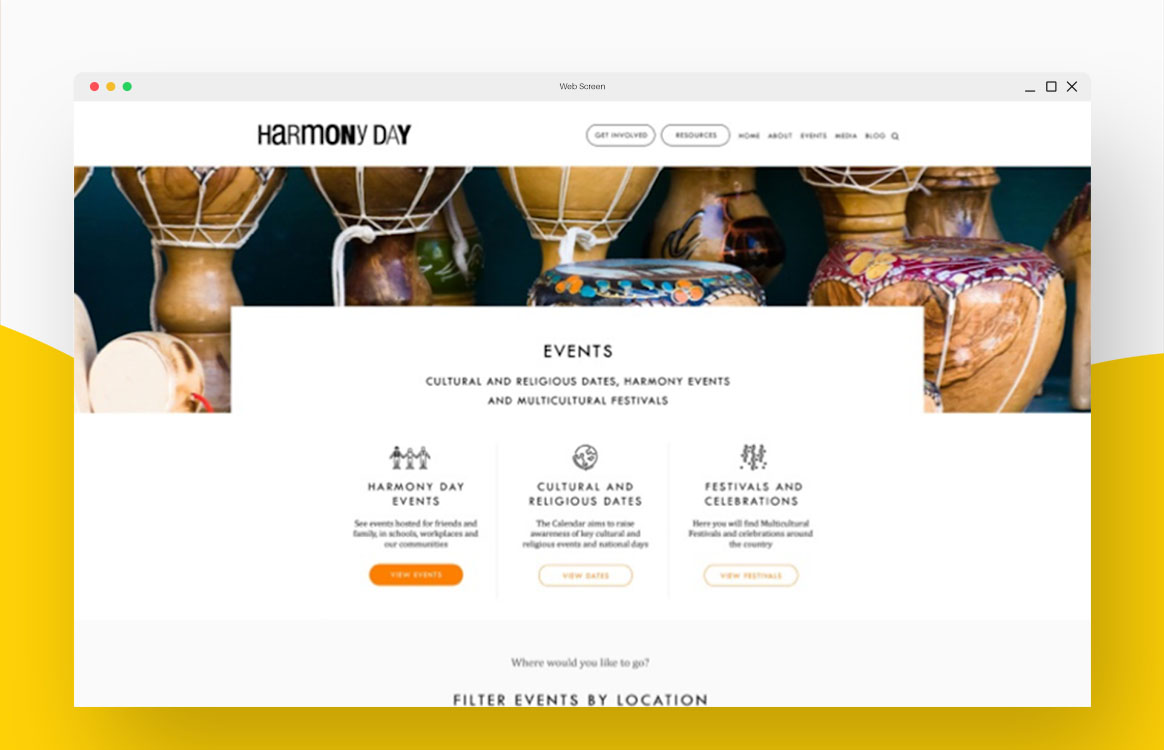
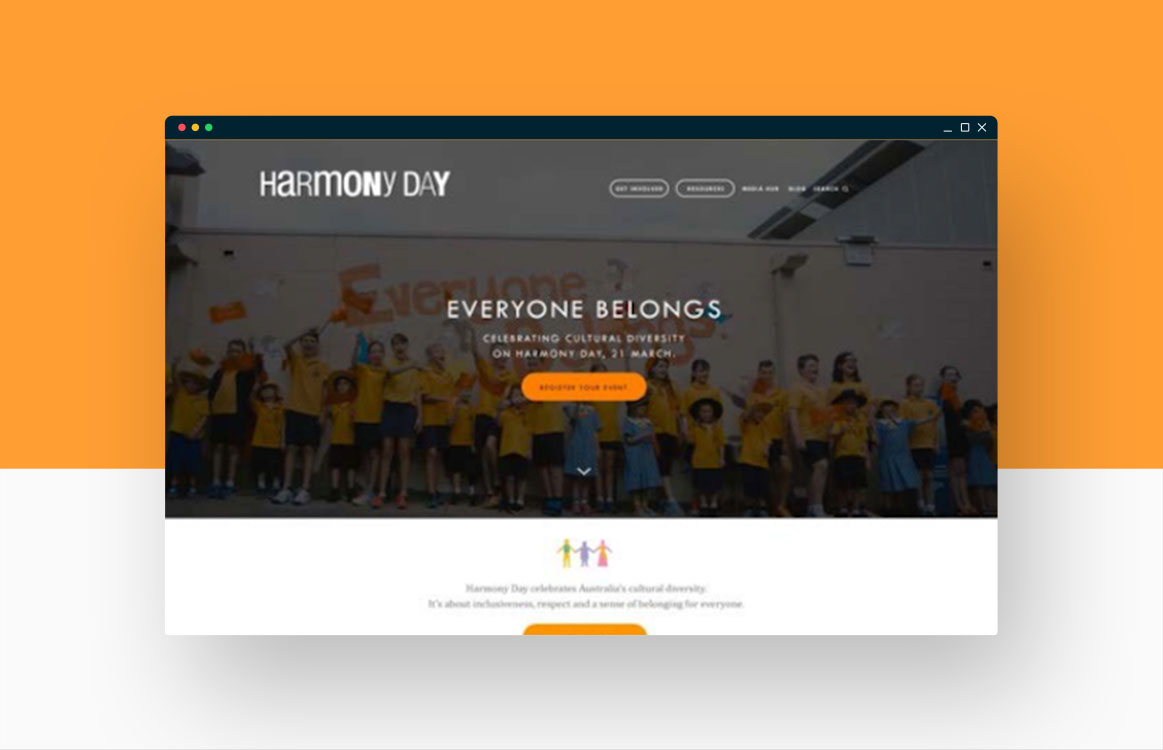
Having a multidisciplinary team has been key to the success of the project. Throughout the design process, Sandra from Communication and Media; Gregory, Melissa, Vicky and Chris from Online Services; Jodie and Pattie from Policy were 100% involved — from user recruitment, to on-going sharing of corporate knowledge and responding to user feedback.
I think it’s exciting! I’m confident that you have captured what is needed.
Research participant, Alpha testing
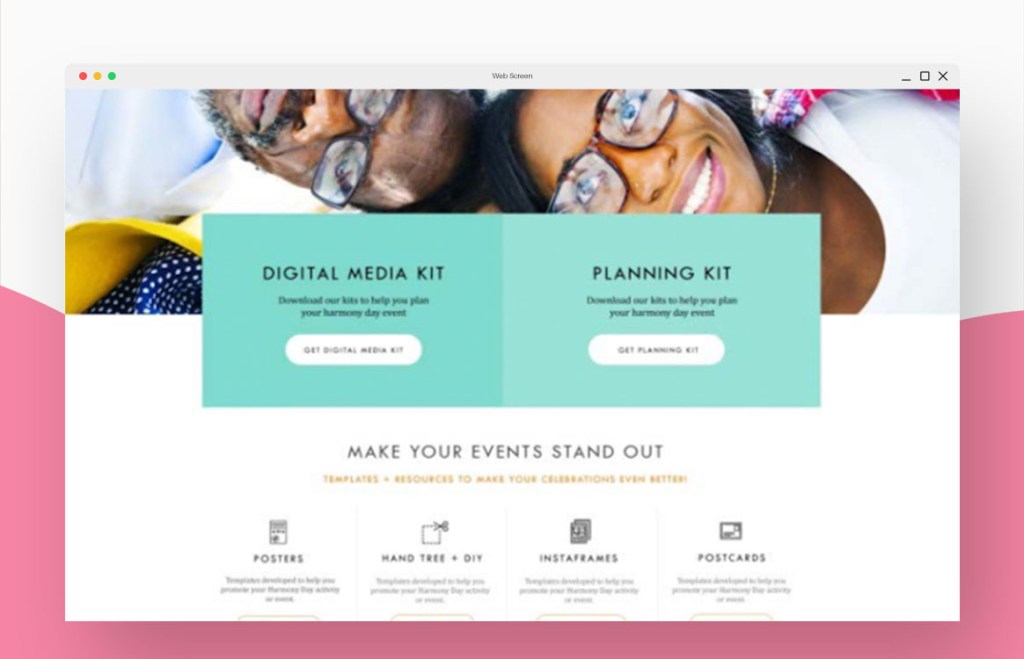
Changing ‘Engagement kit’ to ‘Planning kit’ is a good idea!
Research participant, Alpha testing
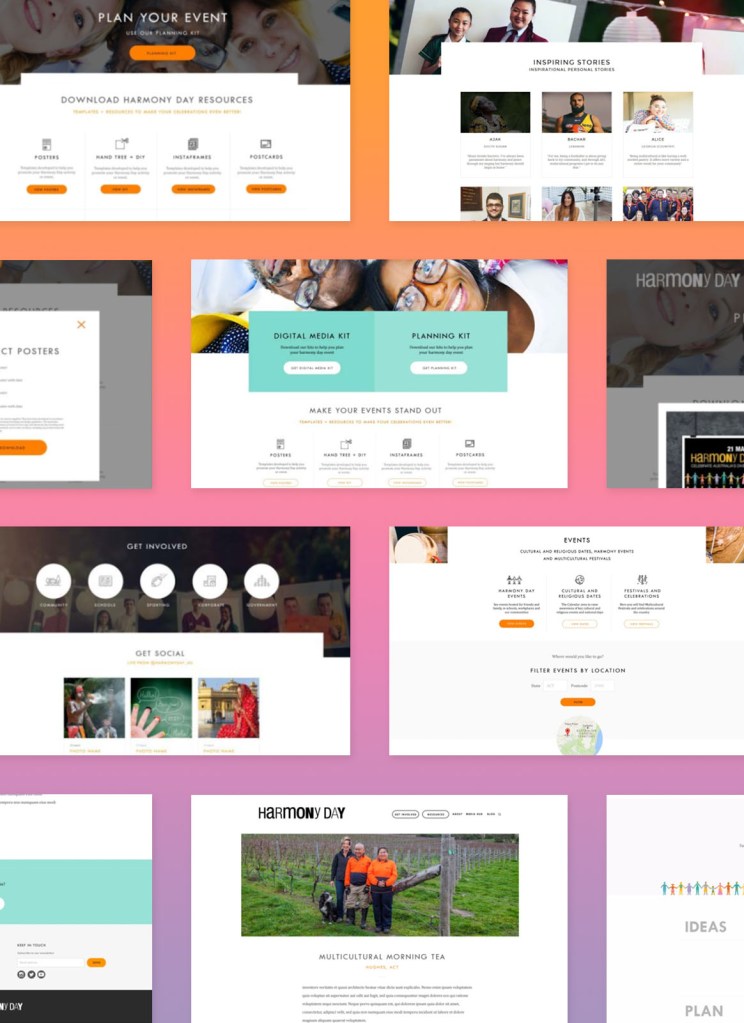
How I contributed to this project’s success
- interview planning / Word, Excel
- remote usability testing / Loop11
- feedback analysis and presentation / PowerPoint, Word, Excel
 Ngan H. Huynh